

House selling guide
How To Sell A House That Needs Major Repairs
A house needing significant work can still be sold, but the Home Report repair categories drive what happens next. Category 3 items and defects such as damp, structural movement or a missing kitchen or bathroom can make a property unmortgageable, which limits you to cash buyers, investors and auction rather than ordinary owner occupiers.
Written for sellers in Scotland
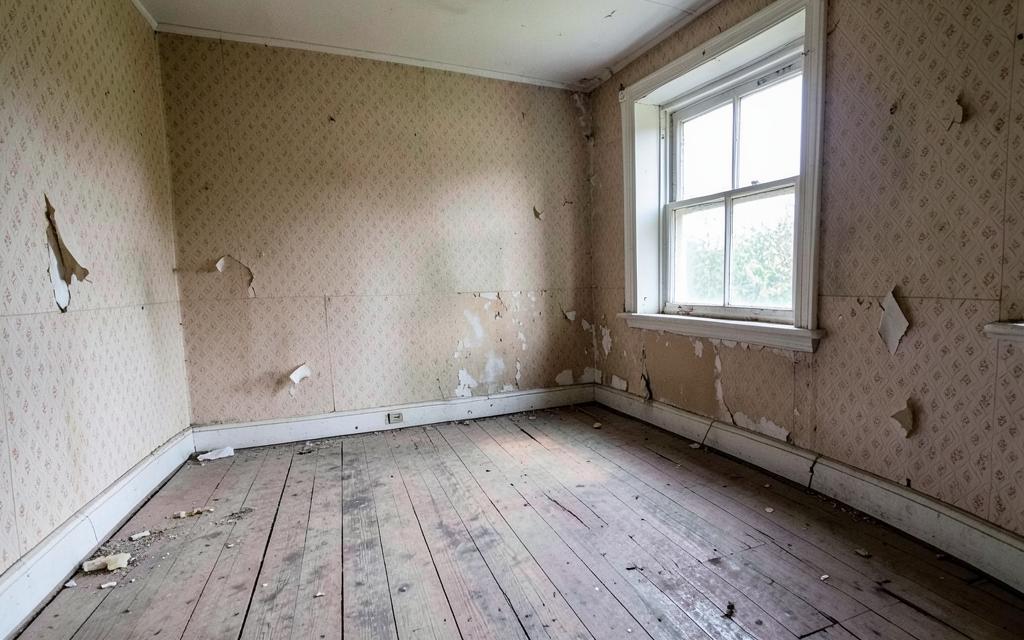
Damp, an ancient electrical system, a roof at the end of its life, subsidence, fire damage or simply forty years without modernisation all put a property into a different market from the one your neighbours sold into.
This guide explains what actually stops a lender, whether doing the work first pays, and the realistic routes to a sale when it does not.
What the Home Report repair categories mean
The Single Survey grades each element of the property. Buyers and their lenders read those grades before anything else.
- A page of category 3 items will frighten mainstream buyers away
- Lenders often retain part of the loan until specified works are done
- Further investigation recommendations, especially for damp or movement, stall sales more than the defects themselves
| Category | What it signals |
|---|---|
| Category 1 | No immediate action needed |
| Category 2 | Repairs or replacement needing future attention, but not urgent |
| Category 3 | Urgent repairs or further investigation needed now |
When a property becomes unmortgageable
Lenders are securing a loan against the property, so anything that threatens its value or habitability makes them refuse. It is not about how liveable you find it.
- No working kitchen or bathroom
- Structural movement, subsidence or serious roof failure
- Extensive damp, rot or an active infestation
- Non standard construction such as certain prefabricated or steel framed types
- Japanese knotweed within the influencing distance
- Fire or flood damage not yet made good
- Missing building warrants or completion certificates for major alterations
Step by step
- 1
Get the property properly assessed
A surveyor or a builder you trust should tell you what is urgent, what is cosmetic and what a buyer's surveyor will pick up.
- 2
Get real quotes, not estimates
Two or three written quotes for each significant job. Renovation decisions made on guesswork are almost always wrong.
- 3
Compare the cost of work with the value it adds
In many areas a full renovation costs more than it adds, particularly where local sale prices are capped by the street rather than the house.
- 4
Fix the cheap things that cause disproportionate fear
A missing handrail, a dripping overflow, a stained ceiling or an out of date electrical certificate all cost little and scare buyers a lot.
- 5
Price it honestly for the condition
Buyers of a project deduct the repair cost plus a margin for the disruption. Pricing as if the work is already done keeps a house on the market for a year.
- 6
Choose the route that matches the buyer
Owner occupiers need a mortgage. If lenders will not lend, your buyers are investors, developers and cash buyers, whether through auction or a direct sale.
Should you renovate before selling?
Sometimes, but far less often than television suggests. Work that removes a barrier to lending usually pays. Work that is purely cosmetic rarely returns its cost, and every month the project runs is another month of mortgage, council tax and insurance.
| Work | Usually worth doing before a sale? |
|---|---|
| Fixing damp, roof or electrics so it is mortgageable | Yes, it widens the buyer pool |
| Basic kitchen or bathroom where there is none | Often yes, for the same reason |
| Full modernisation to current tastes | Rarely, buyers of projects want the discount instead |
| Cosmetic decoration and garden tidy up | Yes, it is cheap and improves first impressions |
| Extensions and loft conversions | No, not before a sale |
Selling as is, without doing the work
A direct sale to a buyer who renovates for a living removes the survey risk entirely. There is no lender to satisfy, no retention, no repair schedule and no chance of the price being renegotiated the week before settlement.
You take a lower headline figure than a fully renovated house would achieve, and you keep the money and the months you would otherwise spend on the work.
Before you decide to fix or sell as is
Work through this and the right answer is usually obvious.
- Written quotes for every significant repair
- A realistic valuation in current condition
- A realistic valuation once the work is done
- The likely length of the works, plus a margin for overrun
- Monthly holding costs during the works
- Whether building warrants or completion certificates are needed
- Whether your insurer will cover the property while it is empty or being worked on
- A cash offer as a benchmark so you can compare like for like
Frequently asked questions
Can I sell a house that is unmortgageable?
+−
Yes. It cannot be sold to a buyer who needs a standard mortgage, but cash buyers, investors and developers buy properties like this routinely.
Do I have to declare known problems?
+−
Yes. The Property Questionnaire in the Home Report asks direct questions and answering inaccurately can unravel the sale later. Being upfront also stops a renegotiation at the last minute.
Will a category 3 repair stop my sale?
+−
Not automatically, but it changes who can buy. Many lenders will insist the work is done or hold back part of the loan until it is.
Is renovating first worth it?
+−
Only when the work removes a barrier to lending or the local ceiling price leaves real headroom. Otherwise the cost, the time and the holding expenses usually outweigh the extra price.
More selling guides
Home Report Scotland
What a Home Report covers, when you need one, and how selling directly removes the cost.
How Long Does It Take to Sell a House in Scotland?
Average timescales for an open-market sale and how a cash sale compares.

Cost of Selling a House in Scotland
Estate agent fees, legal costs, Home Reports and other selling costs explained.
Related guides and tools
Cash offer calculator
Estimate the cash offer to expect and compare it with an estate agent sale.
Read moreAuction or cash buyer?
Fees, timescales and risk compared for a Scottish sale.
Read moreHome Reports explained
What the Home Report covers, what it costs and when you need one.
Read moreThe cost of selling a house in Scotland
Every fee from Home Report to solicitor, with realistic figures.
Read moreSelling for a particular reason?
Selling in your area
- Sell house fast Glasgow
- Sell house fast Edinburgh
- Sell house fast Aberdeen
- Sell house fast Dundee
- Sell house fast Inverness
- Sell house fast Perth
- Sell house fast Stirling
- Sell house fast Falkirk
- Sell house fast Paisley
- Sell house fast East Kilbride
- Sell house fast Ayr
- Sell house fast Ayrshire
- Sell house fast Hamilton
- Sell house fast Motherwell
- Sell house fast Coatbridge
- Sell house fast Kilmarnock
- Sell house fast Livingston
- Sell house fast Dunfermline
- Sell house fast Kirkcaldy
- Sell house fast Greenock
Get Your Free Cash Offer
We can purchase your property in as little as 28 days, with zero solicitor fees or hassle
