

House selling guide
Selling A House In Probate In Scotland
Scotland uses confirmation rather than probate. An executor can market an inherited property straight away but cannot conclude the sale until confirmation is granted by the sheriff court. Most estates also need a date of death valuation, and the house keeps costing money in council tax, insurance and heating until it is sold.
Written for sellers in Scotland
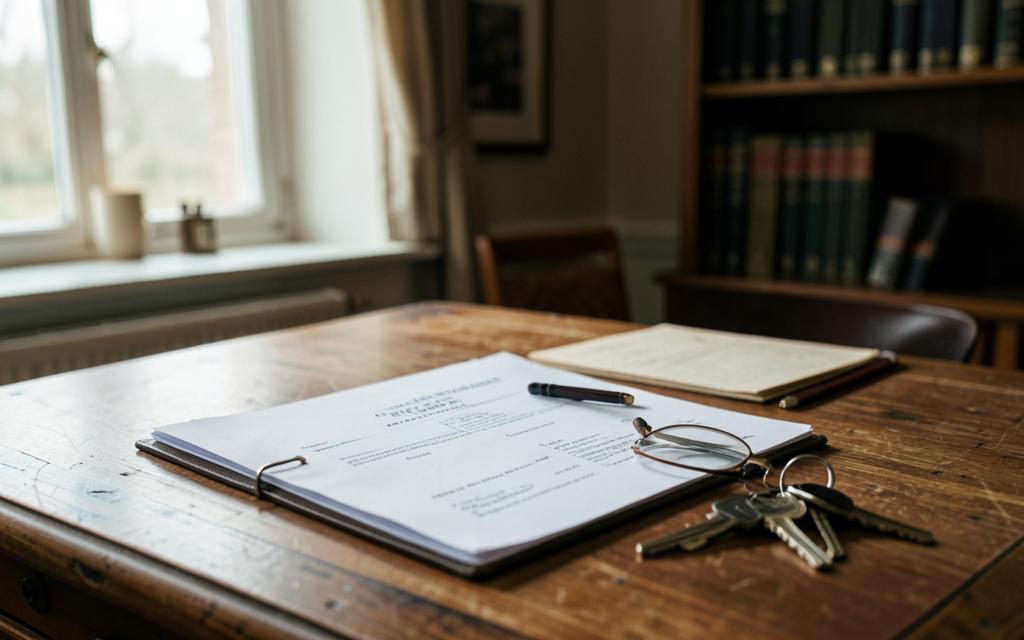
Selling a house you have inherited is rarely just a transaction. It usually happens in the middle of grief, often with brothers and sisters who each want something slightly different, and always with a property that is sitting empty and costing money.
This guide sets out the Scottish process in order, what you can get on with immediately, what has to wait for confirmation, and how to keep the estate from losing money while the paperwork catches up.
Confirmation is the Scottish version of probate
The word probate belongs to the English system. In Scotland the sheriff court issues confirmation, and it is confirmation that gives the executor authority to sell, transfer or otherwise deal with the deceased's property.
If there is a will, it names an executor nominate. If there is no will, a relative applies to be appointed executor dative, which adds time and usually a bond of caution.
- Executor nominate: named in the will, applies directly for confirmation
- Executor dative: appointed by the court where there is no will
- Small estates are handled differently and the sheriff clerk can help with the forms
- Until confirmation is granted nobody has authority to transfer the title
What you can do before confirmation comes through
Waiting idly is the mistake that costs estates the most. Almost everything except the actual transfer can be done in parallel.
- Get a date of death valuation from a surveyor or agent, in writing
- Tell the insurer the house is unoccupied so cover is not lost
- Apply for the council tax exemption for an empty property
- Clear and secure the house and photograph the condition
- Get an offer in principle from a buyer who understands executor sales
Step by step
- 1
Confirm who the executor is
Find the will, identify the executor and get the death certificate extracts. Everything from here runs in the executor's name.
- 2
Value the property as at the date of death
This figure goes on the inventory and sets the baseline for any future capital gains tax. Get it in writing and keep it safe.
- 3
List the whole estate and apply for confirmation
Property, accounts, pensions, debts and funeral costs go on the inventory that goes to the sheriff court with any inheritance tax paperwork.
- 4
Protect the property while you wait
Unoccupied insurance, heating on low through winter, mail redirected, locks changed if keys are missing, and someone checking it regularly.
- 5
Agree the aim with the beneficiaries
Highest possible price over an open ended timeline, or a clean sale on a known date. Disagreement here is what stalls most inherited sales.
- 6
Choose the route and sell
Estate agent with a Home Report, auction with fees and a fixed date, or a direct sale with no Home Report, no viewings and a date you choose.
- 7
Settle debts, then distribute
Funeral costs, estate debts and expenses come out of the proceeds before anything is divided between beneficiaries.
What an empty inherited house costs each month
These are the costs that quietly reduce what everyone inherits. On a house that takes eight months to sell they add up to real money.
| Cost | What to watch for |
|---|---|
| Council tax | The empty exemption is time limited and a surcharge can follow |
| Buildings insurance | Standard policies restrict cover after around 30 days unoccupied |
| Heating and power | Needed in winter to avoid burst pipes and a much bigger bill |
| Security and upkeep | Gardens, gutters, damp and break in risk while nobody is there |
| Mortgage interest | Continues unless life cover repaid the loan |
Where families fall out, and how to avoid it
Most disputes are not about money in the abstract. They are about one beneficiary needing cash now while another wants to hold out for a higher figure, and nobody having written the aim down.
Agreeing a minimum acceptable figure and a deadline in writing, before the property goes anywhere near the market, resolves nearly all of it.
- Write down the minimum price everyone will accept
- Write down the date by which everyone wants it settled
- Agree who deals with the solicitor and the buyer
- Agree how house clearance and repair costs are met from the estate
Executor checklist for an inherited property
Have these in place and the sale will run without stalling.
- Death certificate extracts, several copies
- The will, and confirmation of who the executor is
- Date of death valuation in writing
- Title sheet from Registers of Scotland
- Mortgage redemption figure if a loan is secured on the property
- Unoccupied property insurance in force
- Council tax exemption applied for
- Written agreement from beneficiaries on price and timescale
- Confirmation granted by the sheriff court before missives conclude
Frequently asked questions
How long does confirmation take in Scotland?
+−
It varies with the court and the complexity of the estate. Straightforward estates are quicker than ones with inheritance tax, business assets or no will, so ask your solicitor for a realistic estimate at the outset.
Can I sell the house before confirmation is granted?
+−
You can market it and agree a sale in principle, but missives cannot be concluded and the title cannot transfer until confirmation is in place.
Do we need a Home Report?
+−
Only for an open market sale. A private sale directly to a cash buyer is exempt, so the estate saves both the cost and the delay.
Is there tax to pay when we sell?
+−
Inheritance tax is handled through confirmation. If the property sells for more than the date of death value, capital gains tax may apply to that increase, which is why the original valuation matters.
What if one beneficiary refuses to sell?
+−
The executor holds the authority to sell, but forcing a sale against a beneficiary's wishes is a legal question. Take advice from the estate solicitor before proceeding.
More selling guides

Home Report Scotland
What a Home Report covers, when you need one, and how selling directly removes the cost.
How Long Does It Take to Sell a House in Scotland?
Average timescales for an open-market sale and how a cash sale compares.

Cost of Selling a House in Scotland
Estate agent fees, legal costs, Home Reports and other selling costs explained.
Related guides and tools
Probate property checklist
A step by step checklist for executors selling an inherited house in Scotland.
Read moreSelling an inherited house
How we buy inherited property, including empty homes.
Read moreHome Reports explained
What the Home Report covers, what it costs and when you need one.
Read moreCapital gains tax on a second home
What you may owe when selling a rental or second property.
Read moreSelling for a particular reason?
Selling in your area
- Sell house fast Glasgow
- Sell house fast Edinburgh
- Sell house fast Aberdeen
- Sell house fast Dundee
- Sell house fast Inverness
- Sell house fast Perth
- Sell house fast Stirling
- Sell house fast Falkirk
- Sell house fast Paisley
- Sell house fast East Kilbride
- Sell house fast Ayr
- Sell house fast Ayrshire
- Sell house fast Hamilton
- Sell house fast Motherwell
- Sell house fast Coatbridge
- Sell house fast Kilmarnock
- Sell house fast Livingston
- Sell house fast Dunfermline
- Sell house fast Kirkcaldy
- Sell house fast Greenock
Get Your Free Cash Offer
We can purchase your property in as little as 28 days, with zero solicitor fees or hassle
